
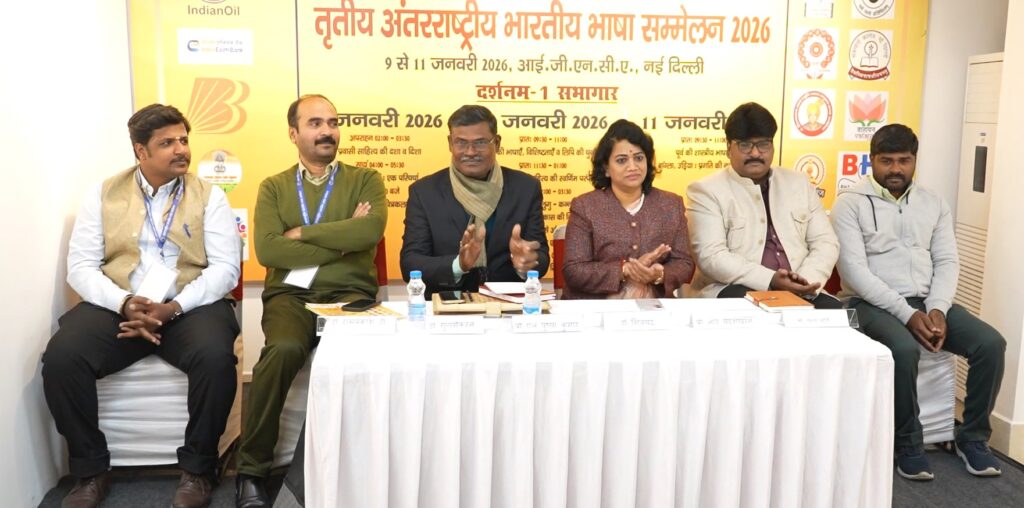
तमिल भाषा में साहित्य की स्वर्णिम परम्परा
10 जनवरी 2026, इंदिरा गांधी राष्ट्रीय कला केंद्र, नई दिल्ली।
अंतरराष्ट्रीय भारतीय भाषा सम्मेलन के इस सत्र का मुख्य उद्देश्य भारतीय भाषाओं की समृद्ध परंपरा, विशेष रूप से तमिल भाषा और साहित्य की प्राचीनता, शास्त्रीय स्वरूप तथा वैश्विक महत्व को रेखांकित करना था। कार्यक्रम की अध्यक्षता प्रो. एल. पुष्प कुमार (निदेशक, भारतीय भाषा केंद्र, दिल्ली विश्वविद्यालय) ने की।
सत्र के मुख्य अतिथि के रूप में प्रो. आर. चंद्रशेखरन (केंद्रीय शास्त्रीय तमिल संस्थान) आमंत्रित थे, किंतु उनके स्थान पर डॉ. आर. भुवनेश्वरी जी (कुलसचिव, केंद्रीय शास्त्रीय तमिल संस्थान, चेन्नई) ने मुख्य अतिथि के रूप में सहभागिता की। मुख्य वक्ता के रूप में डॉ. शिवचंदर (सहायक प्राध्यापक, दिल्ली विश्वविद्यालय) उपस्थित रहे।
विशिष्ट वक्ताओं में डॉ. गुणसेकरन (सह-प्राध्यापक, राजनीति विज्ञान विभाग, दिल्ली विश्वविद्यालय), डॉ. तक्ष्णा मूर्ति टी. (सहायक प्राध्यापक, तमिल विभाग, सेंट स्टीफेंस कॉलेज, दिल्ली विश्वविद्यालय) तथा डॉ. रामप्रकाश डी. (सहायक प्राध्यापक, दिल्ली विश्वविद्यालय) शामिल रहे।
कार्यक्रम का संयोजन प्रो. डी. उमा देवी द्वारा तथा सह-संयोजन सुश्री शिवांगी सिंह द्वारा किया गया।
कार्यक्रम का शुभारंभ प्रो. डी. उमा देवी के संचालन में अतिथियों के स्वागत एवं उद्घाटन के साथ हुआ। अध्यक्षीय संबोधन में प्रो. एल. पुष्प कुमार जी ने भाषा को जीवन का मूल आधार बताते हुए कहा कि भाषा के बिना चिंतन संभव नहीं है। उन्होंने अपने अंग्रेज़ी वक्तव्य में यह रेखांकित किया कि व्यक्ति का अस्तित्व आत्मा से प्रारंभ होता है, किंतु जीवन की प्रत्येक प्रक्रिया भाषा और विचार के माध्यम से ही आगे बढ़ती है। उन्होंने मातृभाषा के महत्व पर बल देते हुए कहा कि मातृभाषा का कोई विकल्प नहीं हो सकता। भाषा परंपरा की समृद्धि को दर्शाती है और साहित्य हमें जीवन जीने की दिशा देता है।
मुख्य अतिथि डॉ. आर. भुवनेश्वरी जी ने केंद्रीय शास्त्रीय तमिल संस्थान में हो रहे शैक्षणिक, शोधात्मक एवं साहित्यिक कार्यों की जानकारी दी। उन्होंने तमिल साहित्य की समृद्ध परंपरा, उसकी वैश्विक प्रतिष्ठा और अंतर्निहित सांस्कृतिक गहराइयों पर प्रकाश डालते हुए उसे विश्व की अमूल्य धरोहर बताया।
मुख्य वक्तव्य में डॉ. शिवचंदर जी ने भाषा को मानवीय विकास से जोड़ते हुए एक प्रभावशाली उदाहरण प्रस्तुत किया। उन्होंने कहा कि लोग प्रायः भाषा को माँ कहते हैं, किंतु भाषा पिता के समान है, क्योंकि जैसे-जैसे व्यक्ति जीवन के विभिन्न चरणों से गुजरता है, उसकी भाषा और अभिव्यक्तियाँ बदलती जाती हैं। उन्होंने तमिल समाज की नैतिक परंपरा, थिरुवल्लुवर और थिरुक्कुरल के माध्यम से तमिल साहित्य में विद्यमान नैतिक, सामाजिक और व्यावसायिक मूल्यों पर विस्तार से चर्चा की तथा तमिल भाषा और व्यवसाय के आपसी संबंध को रेखांकित किया।
विशिष्ट वक्ता डॉ. गुणसेकरन जी ने सेंगोल की ऐतिहासिक और सांस्कृतिक पृष्ठभूमि पर प्रकाश डाला। उन्होंने बताया कि स्वतंत्रता के बाद सेंगोल को किस प्रकार शासन, न्याय और नैतिकता के प्रतीक के रूप में देखा गया। उन्होंने यह भी स्पष्ट किया कि तमिल परंपरा में धर्म और संस्कृति अलग-अलग नहीं, बल्कि एक-दूसरे से गहराई से जुड़े हुए हैं।
डॉ. रामप्रकाश डी. ने भक्ति परंपरा पर अपने विचार रखते हुए कहा कि तमिल भाषा के अस्तित्व और विकास में भक्ति आंदोलन की महत्वपूर्ण भूमिका रही है। उन्होंने शैव सिद्धांत और तमिल साहित्य के बारह प्रमुख ग्रंथों का उल्लेख करते हुए तमिल साहित्य की आध्यात्मिक गहराइयों को उजागर किया।
डॉ. तक्ष्णा मूर्ति जी ने अपने वक्तव्य में तमिल साहित्य की दीर्घकालीन परंपरा, उसकी निरंतरता और समकालीन प्रासंगिकता पर प्रकाश डाला तथा तमिल साहित्य को जीवंत सांस्कृतिक विरासत बताया।
कार्यक्रम के अंत में ऋषि शर्मा जी और अनिल जोशी जी द्वारा समापन टिप्पणी एवं धन्यवाद ज्ञापन प्रस्तुत किया गया। उन्होंने सभी वक्ताओं, आयोजकों और श्रोताओं का आभार व्यक्त किया। इस प्रकार यह सम्मेलन भारतीय भाषाओं, विशेषकर तमिल भाषा और साहित्य की वैश्विक महत्ता को रेखांकित करता हुआ अत्यंत सार्थक, गरिमामय और विचारोत्तेजक वातावरण में संपन्न हुआ।
Session Report (English)
The conference focused on the richness of Indian languages, with special emphasis on the antiquity, classical status, and global significance of the Tamil language and literature. The session was chaired by Prof. L. Pushpa Kumar, Director, Indian Languages Centre, University of Delhi.
Prof. R. Chandrasekaran (Central Institute of Classical Tamil) was invited as the Chief Guest; however, in his absence, Dr. R. Bhuvaneshwari (Registrar, Central Institute of Classical Tamil, Chennai) graced the occasion as the Chief Guest.
The keynote address was delivered by Dr. Shiva Chandar, Assistant Professor, University of Delhi.
Distinguished speakers included Dr. Gunasekaran (Associate Professor, Political Science, University of Delhi), Dr. Takshna Murthy T. (Assistant Professor, Tamil Department, St. Stephen’s College, University of Delhi), and Dr. Ram Prakash D. (Assistant Professor, University of Delhi).
The programme was coordinated by Prof. D. Uma Devi, with Ms. Shivangi Singh as Co-Coordinator.
The conference commenced with the welcome of guests and inaugural remarks by Prof. D. Uma Devi. In his presidential address, Prof. L. Pushpa Kumar emphasized that language is the foundation of life and thought. He stated that while human existence begins with the soul, all processes of life unfold through thinking, and thinking is impossible without language. Stressing the irreplaceable role of the mother tongue, he remarked that language reflects cultural richness and literature teaches us how to lead life.
Chief Guest Dr. R. Bhuvaneshwari highlighted the academic, research, and literary initiatives undertaken by the Central Institute of Classical Tamil. She elaborated on the richness and global stature of Tamil literature, describing it as an invaluable heritage of world civilization.
In his keynote address, Dr. Shiva Chandar offered a unique perspective by comparing language to a father figure. He explained how language evolves across different stages of human life, much like our perception of a father changes over time. He further discussed the ethical systems embedded in Tamil literature, particularly referencing Thiruvalluvar and Thirukkural, and connected Tamil language and literature with business ethics and social values.
Dr. Gunasekaran traced the historical and cultural significance of the Sengol, explaining its role as a symbol of righteous governance and moral authority in Tamil tradition, especially in the post-independence context. He emphasized that religion and culture are deeply interconnected in Tamil civilization.
Dr. Ram Prakash D. spoke on the Bhakti tradition, highlighting its crucial role in sustaining and enriching the Tamil language. He discussed Shaiva Siddhanta and referred to twelve major classical Tamil works that reflect the spiritual depth of Tamil literature.
Dr. Takshna Murthy T. focused on the continuity and depth of the Tamil literary tradition, underlining its relevance in both historical and contemporary contexts.
The conference concluded with closing remarks and a vote of thanks by Mr. Rishi Sharma and Mr. Anil Joshi, who expressed gratitude to all speakers, organizers, and participants. Overall, the conference successfully underscored the global importance of Indian languages—especially Tamil—through an intellectually enriching and culturally profound dialogue.